Reimagining the SIXT Car Rental flows using SEO
Turning high-traffic dead ends into high-converting journeys
By 2021, search competition in the travel and mobility space had intensified, with every major player racing to claim visibility. Yet for SIXT, untapped opportunities in SEO were holding back their full potential.
I was brought in to lead the strategic redesign of their SEO experience — rethinking content structure, discoverability, and user journeys to drive sustainable, long-term growth for one of the world’s leading mobility providers.
" height="38px" id="CcnB9AESy" width="38px"/></svg>)
Duration
8 Months
Team
1 Product Manger, 5 Engineer & 3 Designer
Deliverables
Research, UX Design, UI Design, Prototyping, Usability testing
Outcome
130k+ pages redesigned
01.Overview
From Dead Ends to
Growth Engine
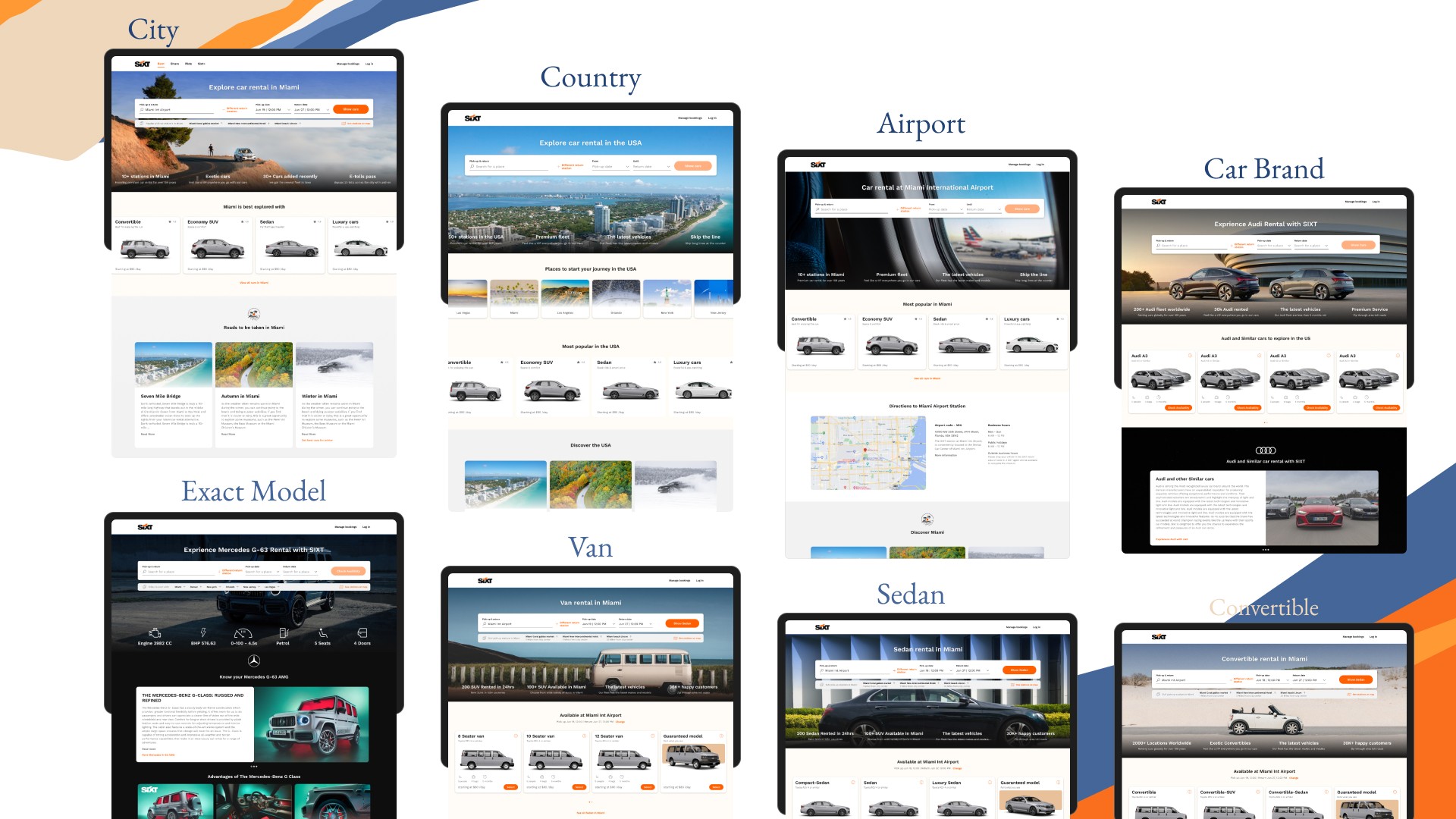
In early 2021, SIXT began reshaping its 108-year legacy with new brand guidelines and a design overhaul. Our landing pages — the first stop for millions of travellers — hadn’t kept pace. It was time for a total rehaul.
When a brand with over a century of heritage commits to transformation, every touchpoint matters. In early 2021, SIXT unveiled new brand guidelines and a refreshed visual identity to reflect a modern, premium positioning. Yet our SEO landing pages — more than 130,000 of them — still carried the weight of outdated layouts, inconsistent messaging, and slow, unstable performance.
For millions of high-intent visitors, these pages were the brand’s first impression. And in a competitive travel market, that first impression can be decisive. This wasn’t about minor updates or optimisations; it was about aligning our most-visited pages with the new vision, ensuring they not only represented the brand but also delivered a booking experience worthy of it.
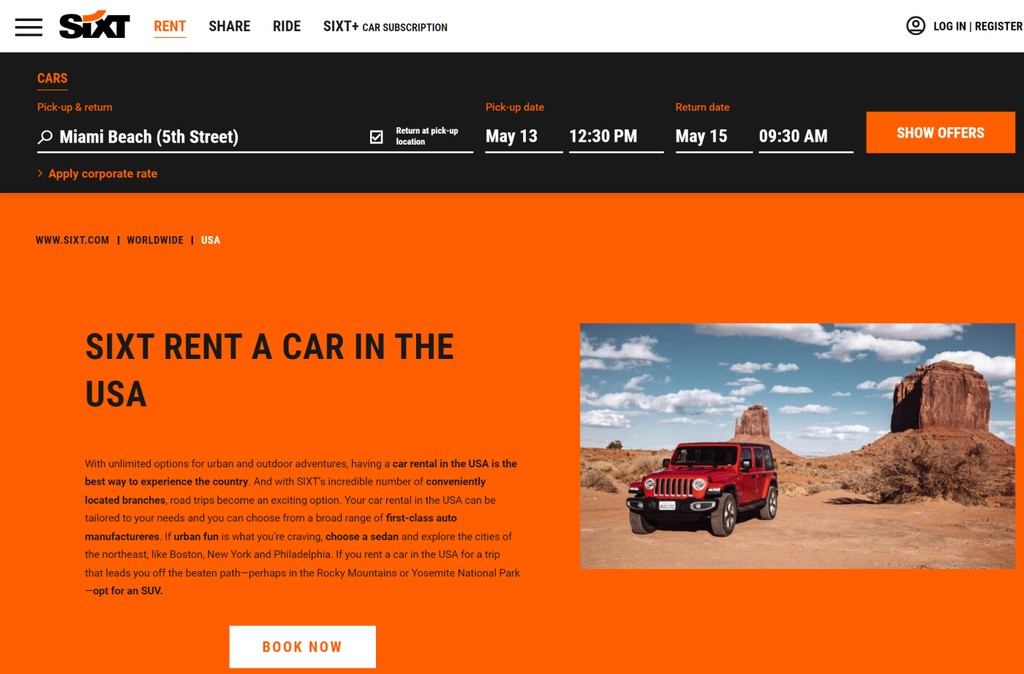
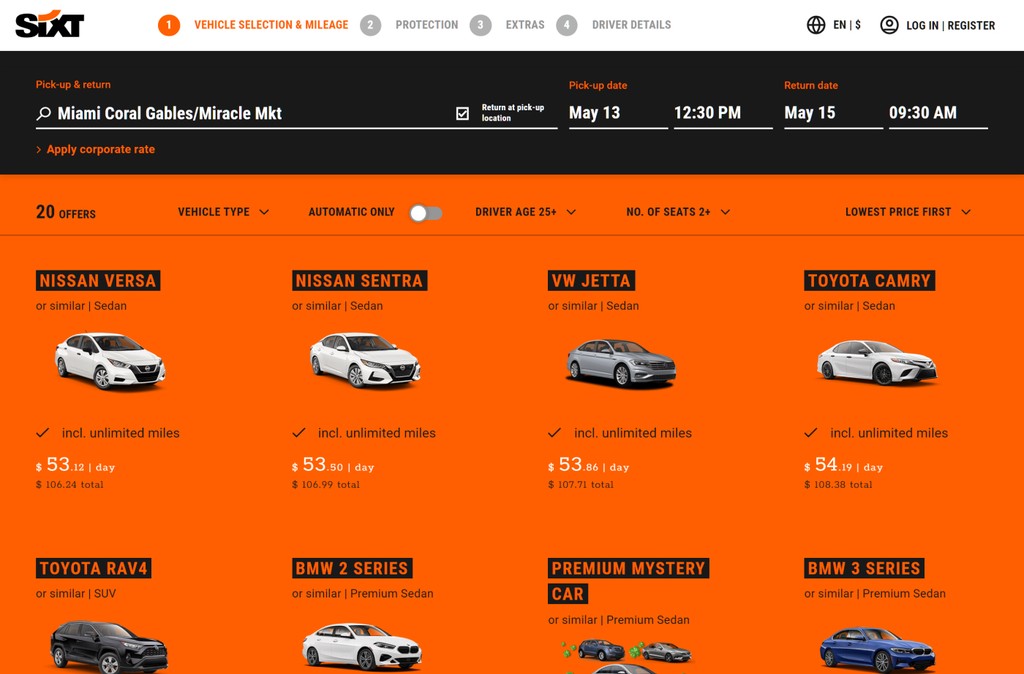
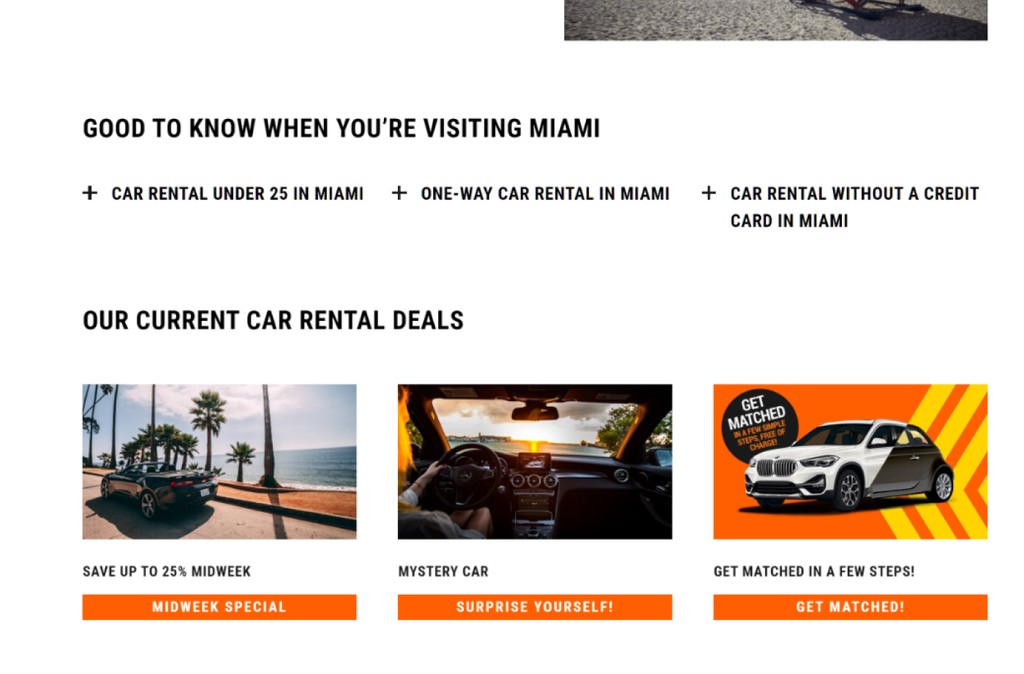
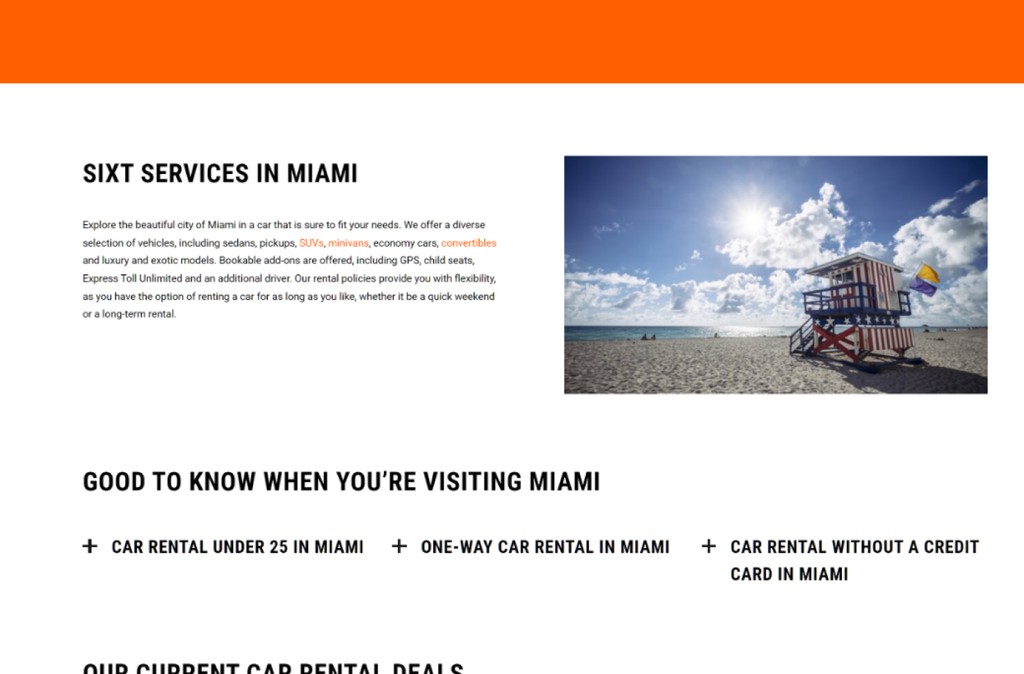
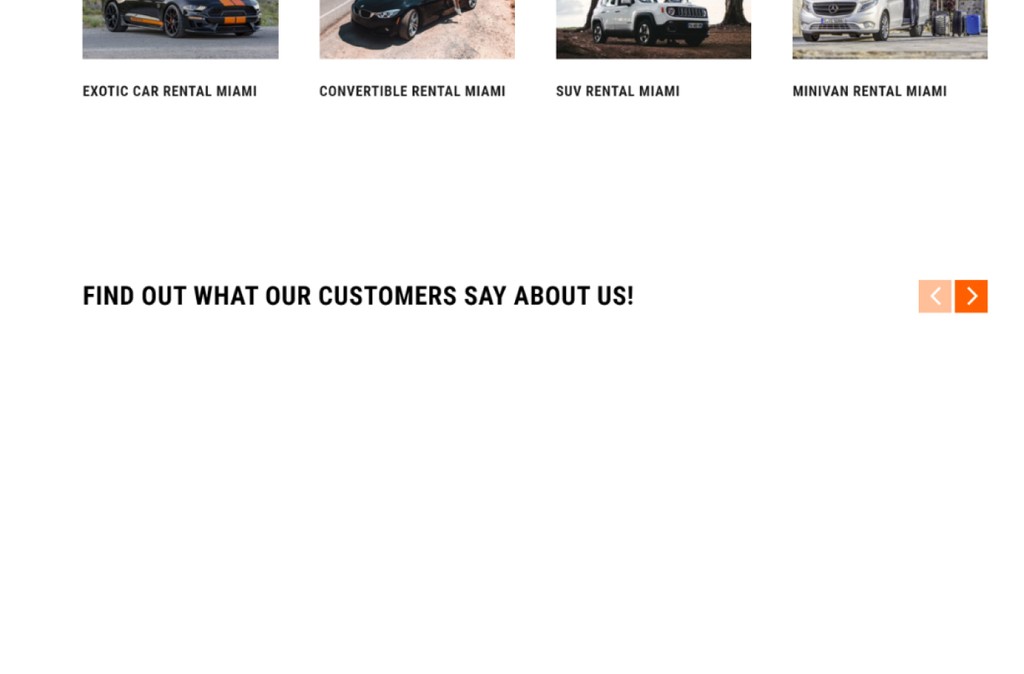
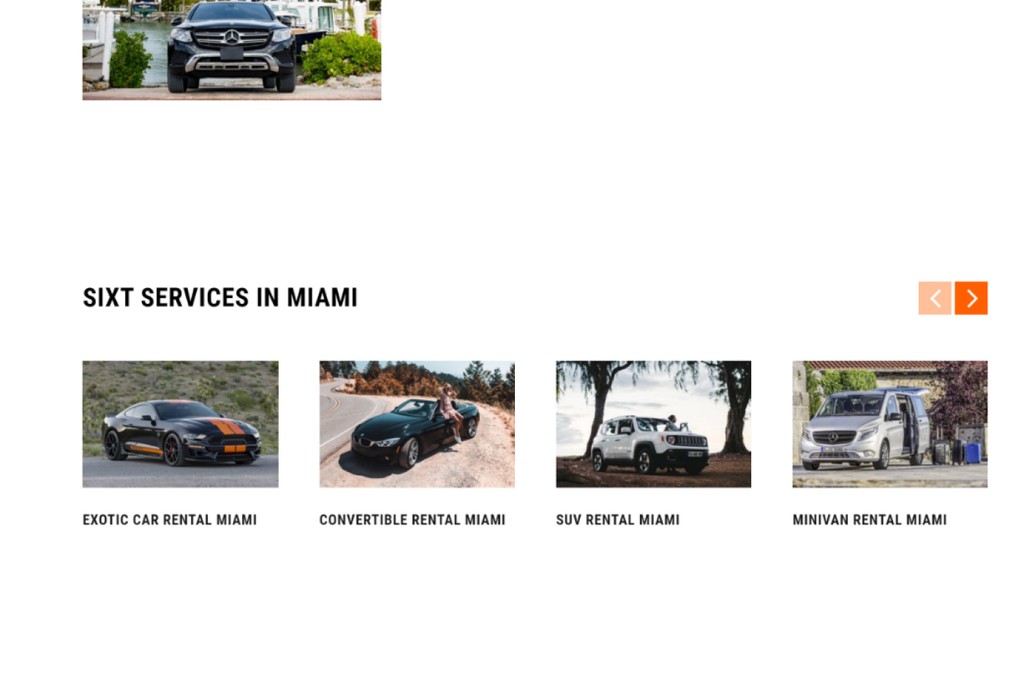
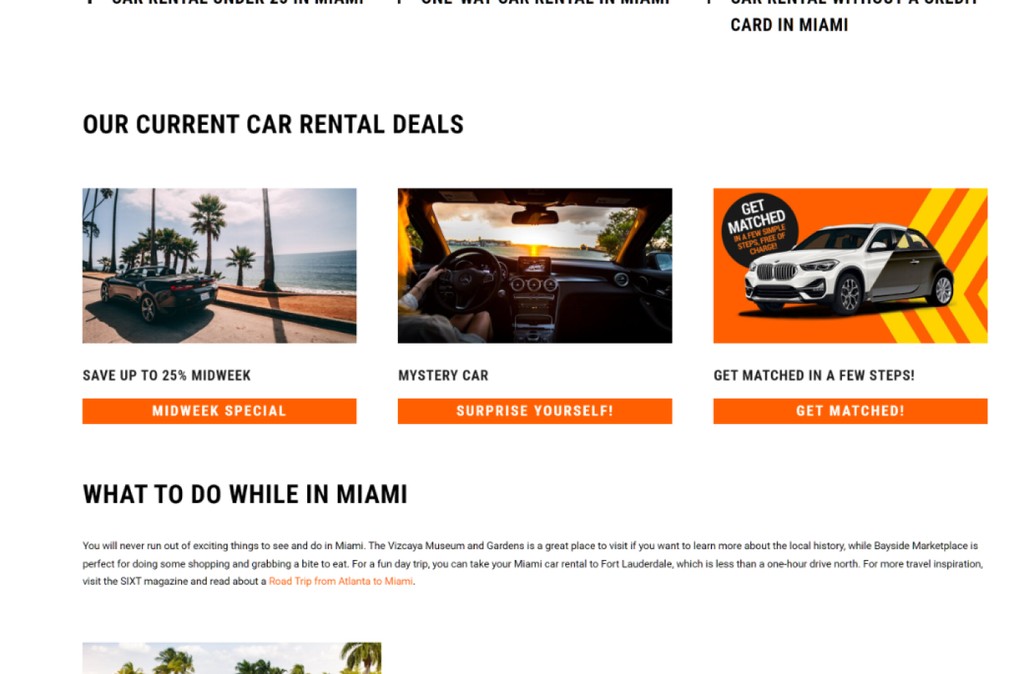
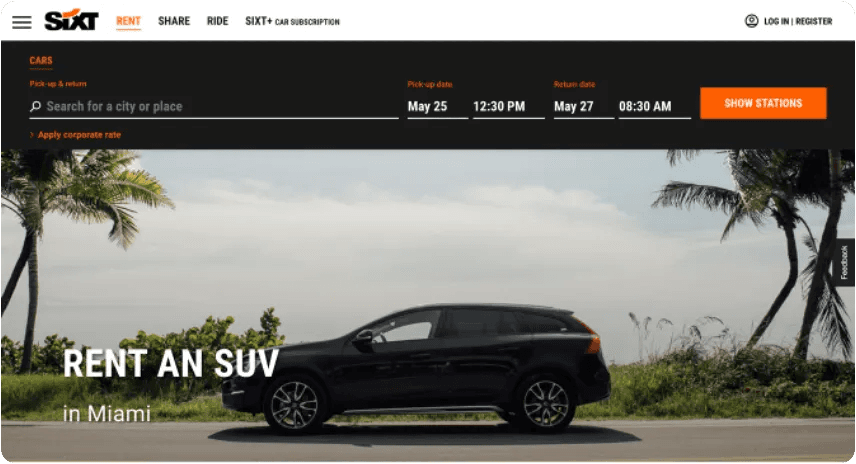
This is what the lading page's looked like when we stepped in.
High-level Goals
A mandate to turn intent into bookings, at scale.
The challenge was as much about performance and trust as it was about design and scalability. Every decision would need to balance global brand alignment with local market needs, while making sure we didn’t lose sight of the traveller’s perspective.
Business Goals
Lay a scalable foundation for a high-performing, brand-consistent first touchpoint.
Understand why landing pages underperformed against the homepage and close that conversion gap.
Increase conversions SEO traffic (KPI : ARPU conversion rate)
Build trust through stronger, clearer brand communication from the first click.
Create a modular system to enable design automation for 130,000+ pages without compromising quality.
User Goals
Help travellers find the right car, faster, with confidence.
Reduce friction by showing relevant options and clear information upfront.
Build confidence with trust signals — from reviews to transparent pricing.
Provide inspiration and guidance to help users progress, whether they’re ready to book or still exploring.
02. My Role
Owning the First Impression
My Challenge was turning 130k+ underperforming pages into a consistent, high-converting experience.
As Senior Product Designer in the Revenue & Growth team, my role stretched far beyond visuals. I had to:
Translate business goals and brand guidelines into a design system that worked for everyone.
Ground every decision in real user behaviour and SEO insights.
Ensure the system could scale across 20+ languages and markets without breaking consistency.
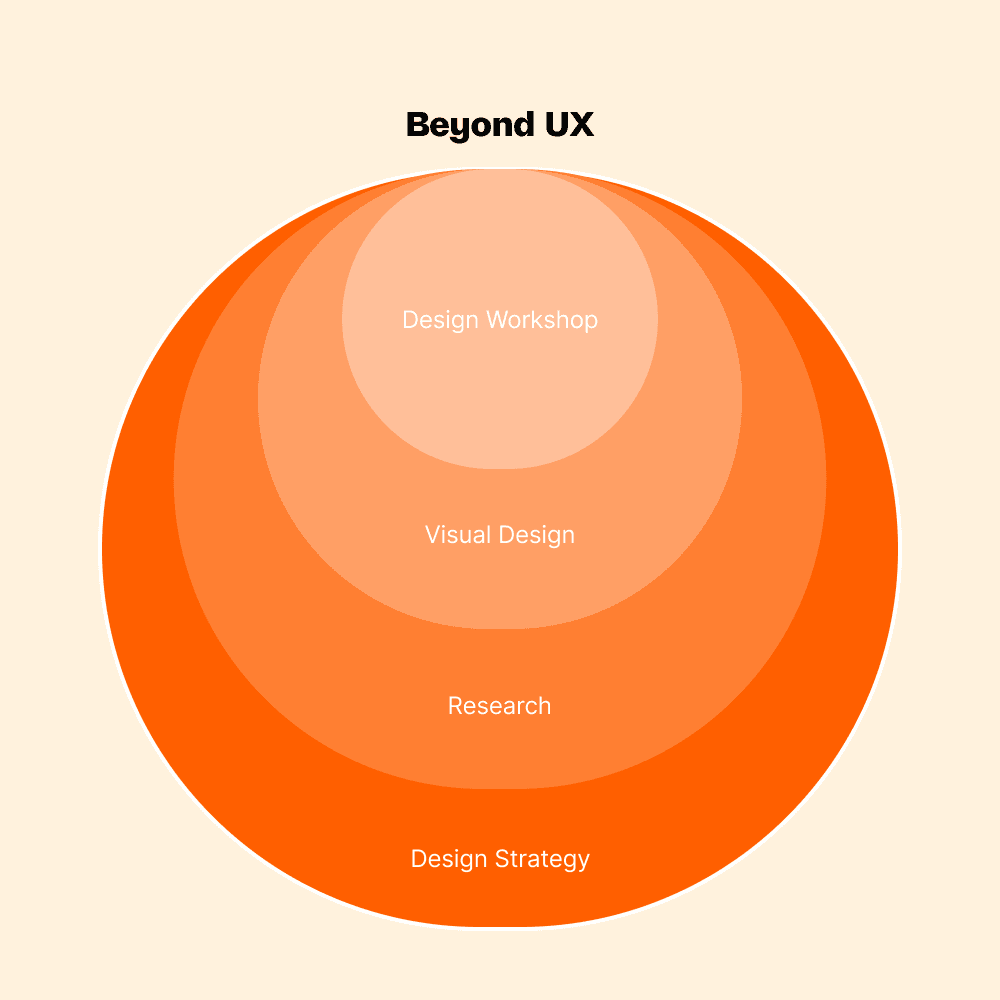
The approach
This meant working hand-in-hand with SEO, marketing, engineering, and local market teams — making sure our designs didn’t just look premium, but performed in the real world.
03. Impact
From High Bounce
to High Impact
This wasn’t an incremental win — it was a step-change in how our landing pages performed and how the business saw their value.
By rethinking every detail — from how content loaded to how trust was built — we turned a critical conversion leak into a reliable growth channel. The change was immediate, measurable, and impossible to ignore.
+25%
Improved click-through rate
+3%
Increased Conversion rate
-14%
Reduction
in bounce rate
+5%
Improved
show offer list rate
65%
Reduced
CLS score
-1
Average
SEO rank
Here's what else changed
We didn’t just fix a bounce problem — we turned one of the business’s biggest weak points into a strategic advantage.
These results weren’t the product of more ad spend or marketing pushes. They came from better design, stronger trust signals, and a smoother booking flow — keeping high-intent visitors engaged instead of losing them after the first click.
The bigger shift
Landing pages moved from a neglected asset to a key revenue driver.
They became an extension of the brand, not just an SEO tool.
The modular system we built is now a blueprint for other high-impact projects.
For confidentiality reasons I have omitted the actual values for these metrics.
04. Kick-off
Clarity to the Chaos
With over 200,000 SEO pages,
we couldn’t redesign everything at once.
The first step was partnering with the SEO team to find where redesign would have the biggest impact on traffic and revenue.
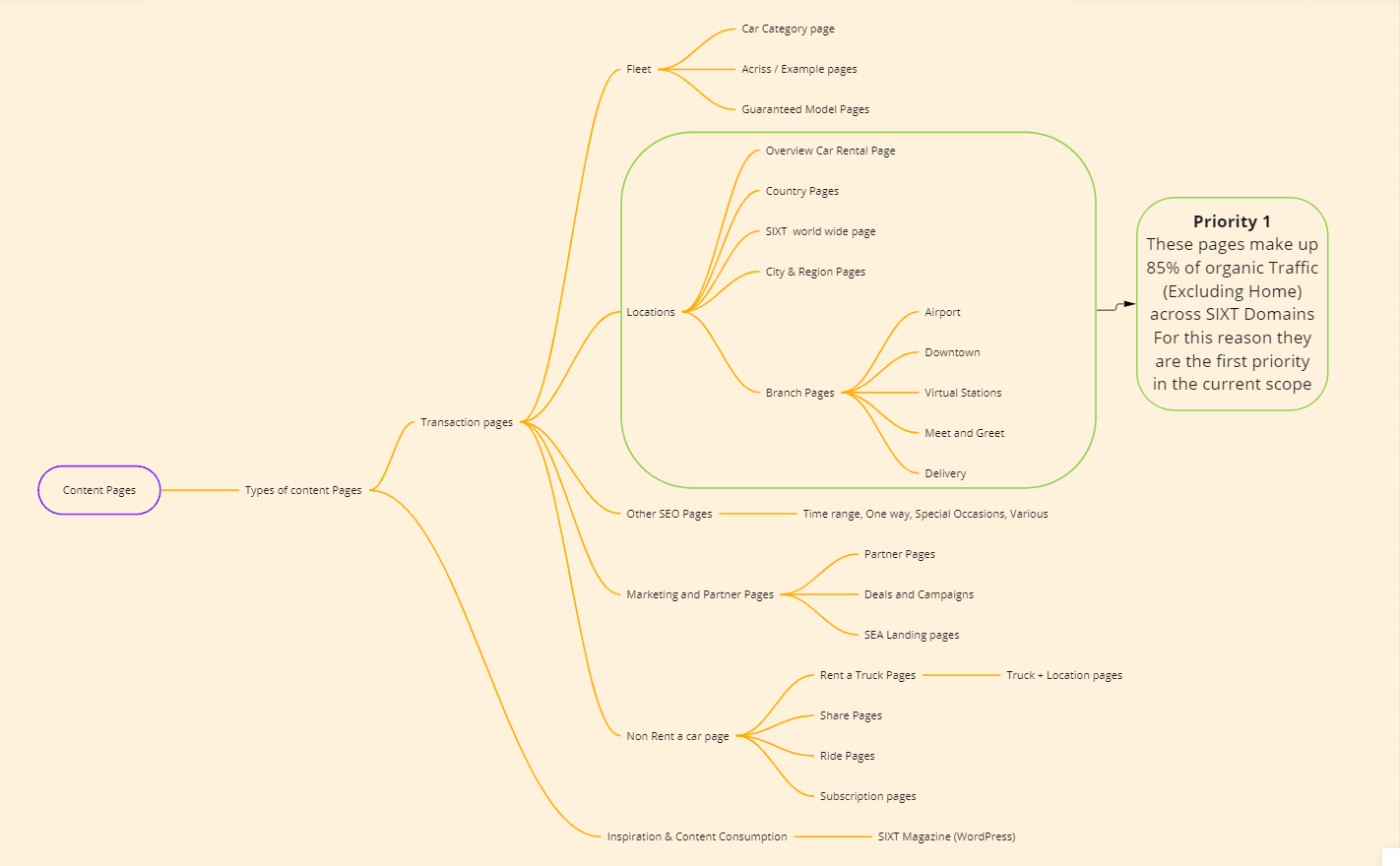
We mapped all the current pages, Due to NDA restrictions we cannot share the actual data analysis.
Mapping all pages made us understand
"85% of our customer's were looking for Geographies & Cars."
These were also the worst-performing pages. Fixing them wasn’t optional; it was the only way to stop millions in missed bookings.”

Sixt car rental miami
Similar Examples
Sixt car rental Kempagowda International
Sixt car rental MG Road
Sixt car rental India
Sixt car Tesla rental
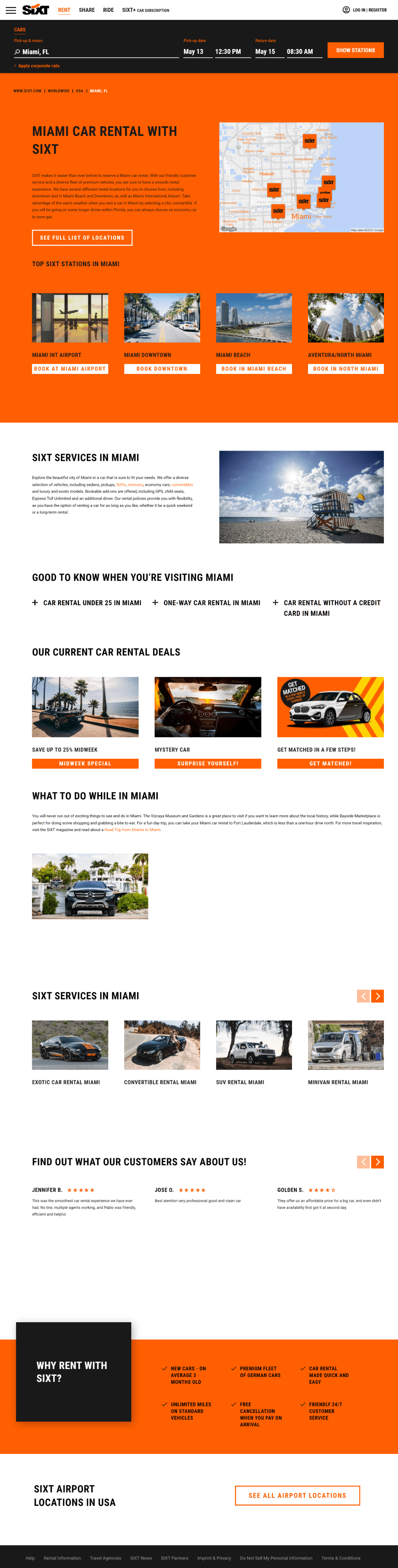
SIXT geography landing page before redesign
Process
We dove deep into detailed performance metrics, keyword intent analysis, and market-by-market data — making sense of a vast, scattered dataset that covered 200k+ landing pages. Through this lens, we could see which parts of the ecosystem truly drove traffic and where optimising design would deliver the most measurable gains.
Outcome — A Clear Phase One
Our analysis revealed a clear priority: Location and Branch pages. These accounted for roughly 85% of all organic traffic (excluding the homepage) and represented the highest opportunity for conversion uplift.
Focusing Phase One here meant we could redesign the experience where it mattered most, proving the value of our new approach before expanding to the rest of the system.
Key team challenges
After mapping every stakeholder, we wanted to uncover how they understood the project — and the obstacles they faced in making it real.
Here’s what we understood
Team
Challenge
Solution
Organisational
SIXT’s legacy processes slowed decision-making for a fast-moving initiative.
Framed new designs as an extension of the brand refresh, building trust with leadership while introducing conversion-focused elements.
Product
Requirements shifted as product processes were still forming, creating late clarity.
Adopted an agile, validation-first workflow — testing in small increments and securing sign-off early to keep momentum.
Engineering
Legacy CMS and fragmented codebases made it difficult to roll out consistent templates quickly. Small changes risked breaking in multiple markets.
Partnered with engineering to create modular components and design tokens, ensuring consistency and enabling a 40-day rollout across 20+ languages without sacrificing quality.
Operations
Vehicle availability sometimes mismatched what was shown online, hurting customer confidence.
Applied an “under commit, over deliver” approach — proactive upgrades and clearer communication to turn friction into delight.
05. Understanding
Seeing the cracks
beneath the surface.
With geography and category pages identified as the first focus, the next step was to understand what was really happening on them — how they looked, how people navigated, and where the business was losing.
Design audit
Revealing inconsistencies
and dead ends.
Flows across geography and category pages showed branding mismatches, hidden CTAs, and abrupt drop-offs. Users lost trust before converting.
Process
We dove deep into detailed performance metrics, keyword intent analysis, and market-by-market data — making sense of a vast, scattered dataset that covered 200k+ landing pages. Through this lens, we could see which parts of the ecosystem truly drove traffic and where optimising design would deliver the most measurable gains.
Outcome — A Clear Phase One
Our analysis revealed a clear priority: Location and Branch pages. These accounted for roughly 85% of all organic traffic (excluding the homepage) and represented the highest opportunity for conversion uplift.
Focusing Phase One here meant we could redesign the experience where it mattered most, proving the value of our new approach before expanding to the rest of the system.
Understanding users’ search intent
Diving into the data
After mapping every stakeholder, we wanted to uncover how they understood the project — and the obstacles they faced in making it real.
With the stakeholder map in place, our focus shifted to the realities behind the brief. Every team had different definitions of success, different constraints, and different timelines. Understanding these differences early allowed us to anticipate roadblocks and design a solution that could pass every checkpoint without losing momentum.
04. Kick-off
Starting where impact
matters most
With over 200,000 SEO pages, we couldn’t redesign everything at once. The first step was partnering with the SEO team to find where redesign would have the biggest impact on traffic and revenue.
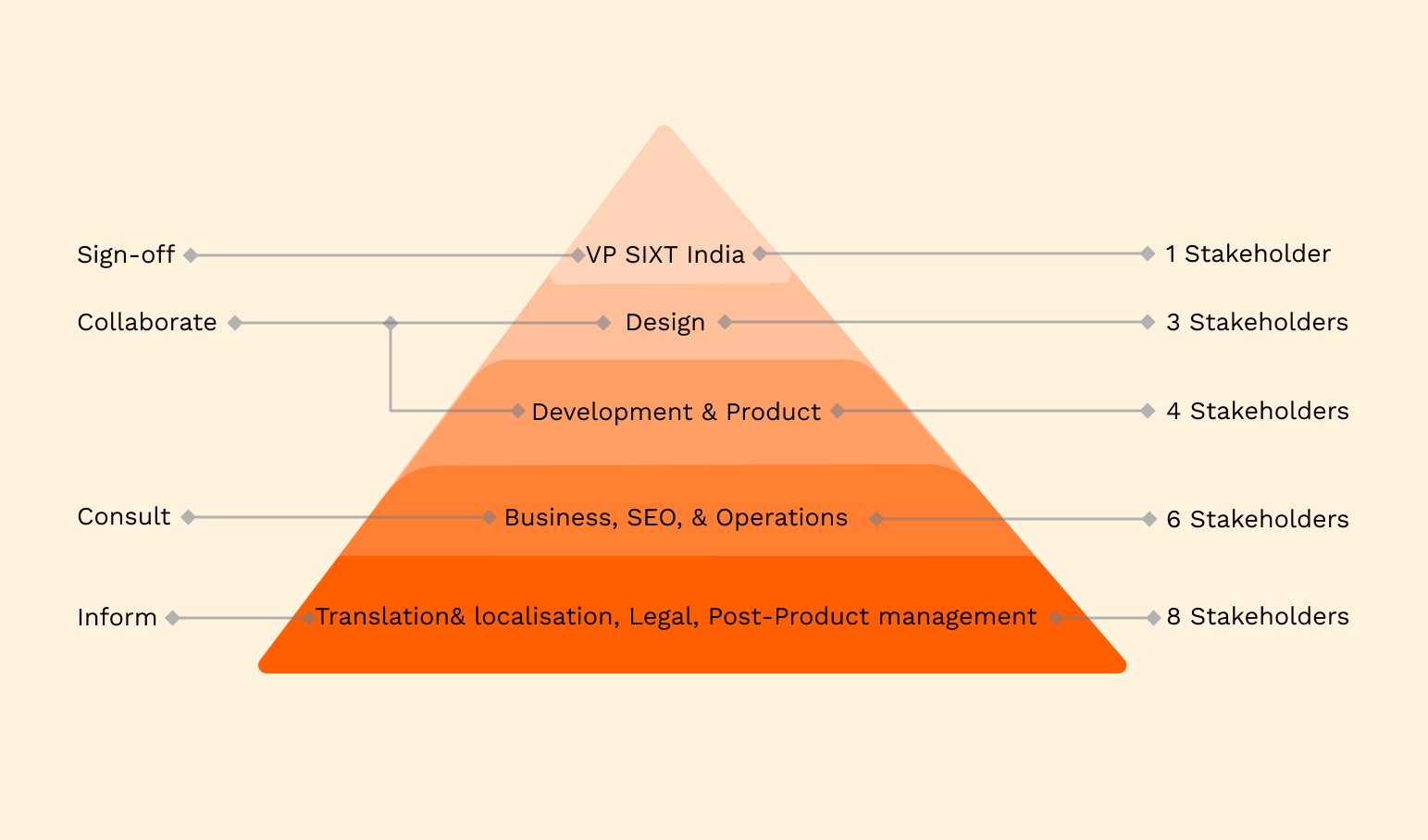
Mapping Influence and Collaboration
The stakeholder pyramid mapped every team’s influence and role in the redesign. As the project progressed, some responsibilities shifted — like Legal moving to consultation to final design approvals.
Key team challenges
After mapping every stakeholder, we wanted to uncover how they understood the project — and the obstacles they faced in making it real.
Here’s what we understood
Organisational challenges
SIXT’s 108-year legacy meant certain workflows, decision-making structures, and review processes were deeply embedded. While they had their strengths, these practices could slow down a fast-moving, performance-focused initiative. Finding common ground between heritage and modern design practices became a recurring theme.
Solution
We used the brand’s newly released design guidelines as a bridge between old and new. By framing changes as an extension of the brand refresh rather than a complete departure, we built trust with senior stakeholders while introducing more dynamic, conversion-focused elements.
Product challenges
The product function was still maturing, with teams building processes and standards on the fly. Requirements shifted as we progressed, and clarity often emerged late.
Solution
We adopted an agile, validation-first workflow — prototyping and testing in small increments, and securing product sign-off before committing to full-scale design. This kept momentum high while reducing the risk of late-stage rework.
Operational challenges
SIXT’s operational network was one of the best in the industry, but in 2021 it still lagged behind evolving customer expectations. Availability mismatches — such as showing a vehicle online that wasn’t actually at a branch — undermined trust. Customers needed certainty that what they saw was what they’d get.
Solution
We introduced an “under commit, over deliver” strategy to bridge the gap. This included operational levers like offering free upgrades when the booked vehicle wasn’t available, and refining communication touchpoints to keep customers informed before arrival. This approach turned potential disappointments into moments of delight while reducing last-minute friction at branches.
Mapping the 130K+ Page Landscape
After knowing the team challenges we wanted to know how the 130K+ pages were structured and connected — from high-traffic country, branch, and airport pages to smaller, niche pages. This gave us a clear picture of how the ecosystem worked before deciding what to focus on next.
108 +
Country pages
First entry points for each market, introducing SIXT’s offering at a national level.
"SIXT Car rental India"
2200+
Branch pages
Localised hubs with details for each rental branch, tailored to city or region.
"SIXT Car rental India"
1800+
Airport pages
Location-specific pages built for travellers searching for rentals at airports.
"SIXT car rental Kempagowda airport"
9892+
Other pages
Niche, seasonal, and promotional pages serving specialised rental needs.
"SIXT rental Spiti winter expedition"
Explore the previous version's here
Explore More
Let's see some more work


3 min read
Jan 2024 -March 2024
Reimagining the
SIXT Car Rental flows.
Turning high-traffic dead
ends into high-converting journeys
Product Design
Generative AI
Viplav Upadhyay
Author
Read Case study
5 min read
Jan 2025 -March 2025
Khoros
AI Moderator Inbox
Redesigning Khoros’ moderator inbox to enable AI-powered assistance at scale
Product Design
Generative AI
Viplav Upadhyay
Author
Read Case study